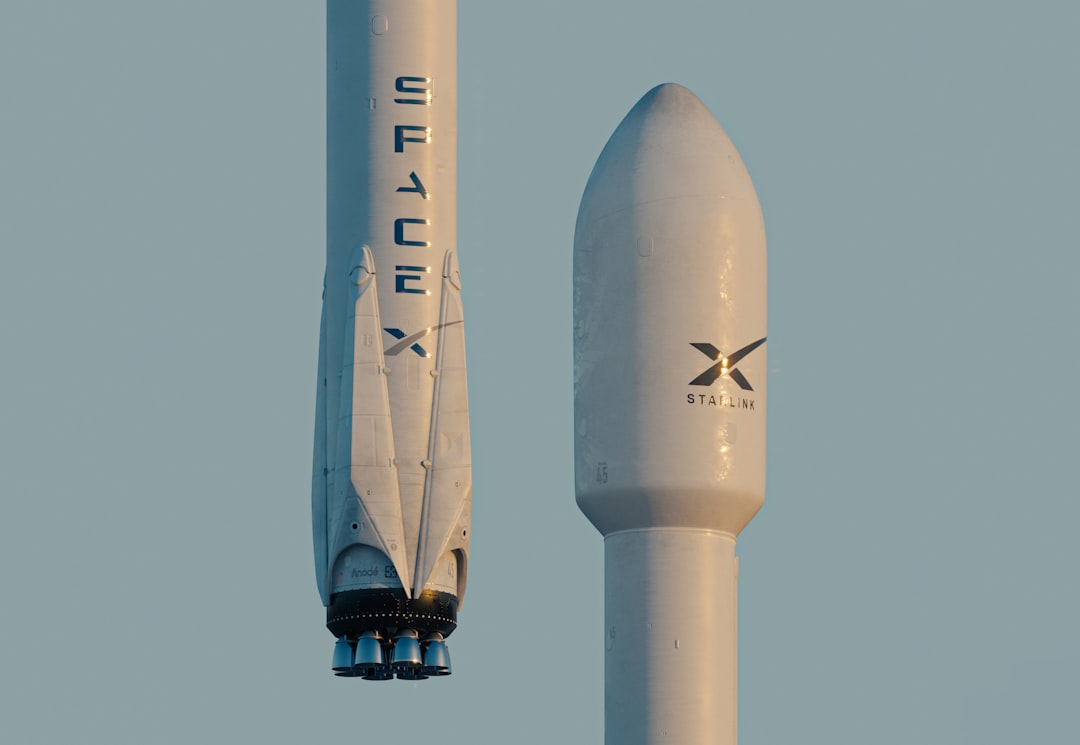
The Anticipation of a Landmark Public Offering
The financial world and the aerospace industry are abuzz with speculation surrounding a potential Initial Public Offering (IPO) from SpaceX, the pioneering company led by Elon Musk. While the specifics of such a move remain confidential until official disclosures are made, the prospect of one of the world's most innovative private companies transitioning to public ownership carries immense implications. A public listing would not only redefine the landscape of space exploration investment but also offer a rare glimpse into the financial workings and future ambitions of a company that has consistently pushed the boundaries of what is possible beyond Earth.
For years, SpaceX has operated as a privately held entity, funded by a mix of venture capital, private equity, and government contracts. This structure has allowed it significant operational agility and the freedom to pursue audacious, long-term goals without the immediate pressures of quarterly earnings reports. However, the sheer scale of its ongoing projects, from the Starship development to the expansive Starlink satellite constellation, necessitates substantial and continuous capital investment. A public offering could unlock unprecedented funding, allowing a broader base of investors to participate in the company's ambitious vision.
Understanding the Dynamics of an Initial Public Offering (IPO)
Before delving into the unique aspects of a potential SpaceX IPO, it's crucial to grasp the fundamental nature of an Initial Public Offering. An IPO marks the first time a private company offers shares of its stock to the public. This transition is a complex, multi-stage process governed by stringent regulatory requirements, primarily overseen by the U.S. Securities and Exchange Commission (SEC).
What an IPO Entails
At its core, an IPO is a fundraising mechanism. By selling ownership stakes (shares) to public investors, a company can raise significant capital to fund expansion, research and development, debt repayment, or other strategic initiatives. It also provides liquidity for early investors and employees who hold company stock. The move from private to public status transforms a company's financial structure and its obligations to a much wider array of stakeholders.
The Strategic Rationale for Going Public
Companies typically pursue an IPO for several compelling reasons. The primary motivation is often to secure substantial capital for aggressive growth plans that might be difficult to finance solely through private channels. Beyond fundraising, going public enhances a company's public profile and prestige, which can attract top talent and strengthen its brand. It also creates a publicly traded currency (stock) that can be used for mergers and acquisitions, offering greater flexibility in strategic partnerships. For a company like SpaceX, with its monumental projects, access to deeper capital markets is a critical enabler for its long-term vision.
Key Phases of the IPO Process
The journey to becoming a publicly traded company involves several distinct phases. It begins with the selection of investment banks, known as underwriters, who manage the process. These banks assist with due diligence, valuation, and the preparation of a detailed registration statement (Form S-1 in the U.S.) that is filed confidentially with the SEC. This document provides comprehensive financial and operational information about the company. After a period of SEC review and potential revisions, the company embarks on a 'roadshow' to market its shares to institutional investors. Finally, on the 'listing day,' shares are offered to the public at an initial price, and trading commences on a stock exchange.
The Groundbreaking Significance of a Potential SpaceX Public Offering
A potential SpaceX IPO is not just another market event; it represents a pivotal moment for several industries and the broader economy. Given its unique position at the forefront of space technology, a public listing would carry implications far beyond typical market debuts.
Pioneering New Frontiers in Aerospace and Beyond
SpaceX has already revolutionized spaceflight with reusable rockets, significantly reducing the cost of access to space. Its Starlink division aims to provide global satellite internet, a project with vast societal and economic potential. A public listing would underscore the maturation of the commercial space industry, signaling to the world that space is no longer solely the domain of government agencies but a viable and lucrative commercial frontier. This could inspire further innovation and investment across the entire space economy, from satellite manufacturing to in-space resource utilization.
An Unprecedented Valuation and Market Impact
Reports of potential valuations, such as the astounding $1.75 trillion figure, place SpaceX in an elite league, potentially making it one of the most valuable public companies globally. Such a valuation reflects not only its current achievements but also the immense future potential embedded in its various ventures, including interplanetary travel and asteroid mining. A public offering of this magnitude would undoubtedly generate significant investor interest, potentially drawing capital from a wide range of portfolios and re-allocating funds across different sectors. Its entry could even influence the valuation benchmarks for other high-tech and private 'unicorn' companies.
Empowering Ambitious Long-Term Projects
SpaceX's stated goals are incredibly ambitious, ranging from establishing a permanent human presence on Mars to building a vast network of thousands of Starlink satellites. These endeavors require sustained, massive investment over many years, if not decades. Going public could provide the necessary financial bedrock, allowing the company to accelerate its development cycles, scale manufacturing, and expand its global footprint without solely relying on private funding rounds which can be more restrictive in size and frequency.
Implications for Investors and the Broader Market
For individual and institutional investors, a SpaceX IPO would present a unique opportunity, coupled with its own set of considerations. The market itself would also feel the ripple effects of such a significant new entrant.
Opportunities for Public Investment in Space Innovation
Currently, direct investment in SpaceX is largely confined to accredited investors and institutional funds. A public offering would democratize access, allowing everyday investors to own a piece of a company at the cutting edge of space exploration, satellite technology, and potentially future interplanetary infrastructure. This would appeal to those seeking exposure to high-growth, transformative industries and companies with a strong vision for the future.
Navigating Potential Risks and Volatility
As with any investment, particularly in high-growth, innovative companies, a SpaceX IPO would come with inherent risks. The company operates in a capital-intensive industry with long development cycles and significant technical challenges. Regulatory hurdles, competitive pressures, and the unpredictable nature of technological breakthroughs could all impact its performance. Initial public offerings, especially those from highly anticipated companies, can also be subject to significant price volatility in their early trading days, requiring investors to exercise caution and long-term perspective.
Broader Market Repercussions
The sheer size and profile of a SpaceX IPO could have broader implications for financial markets. It might draw capital away from other sectors or companies, particularly those in traditional aerospace or telecommunications, as investors seek exposure to this new, exciting opportunity. Its performance could also serve as a barometer for investor confidence in disruptive technologies and long-term, visionary projects. Furthermore, the success of a SpaceX IPO could encourage other major private companies to consider going public, invigorating the IPO market.
Navigating the Future: SpaceX's Vision and Public Ambitions
The journey from a private, ambitious startup to a potentially publicly traded titan is a testament to SpaceX's relentless pursuit of its mission. While an IPO introduces new dynamics, including increased scrutiny and shareholder expectations, it also provides a powerful mechanism to fuel the company's grandest ambitions.
SpaceX's vision extends far beyond Earth's orbit, encompassing the establishment of human civilization on Mars and the creation of a global internet backbone. Public capital could be the accelerant needed to realize these monumental goals, transforming science fiction into reality. As the world watches for official announcements, the prospect of investing in a company literally reaching for the stars remains an compelling narrative for the future of finance and human endeavor.